Check the tile profile
A replacement must fit the roof system, not simply resemble the colour from the ground.
Tiled roof repair and maintenance
A leaking tiled roof may involve cracked or slipped tiles, ridge capping, bedding, pointing, flashing, valleys, penetrations or drainage. The correct repair comes from tracing the water path and checking the roof around the visible defect.
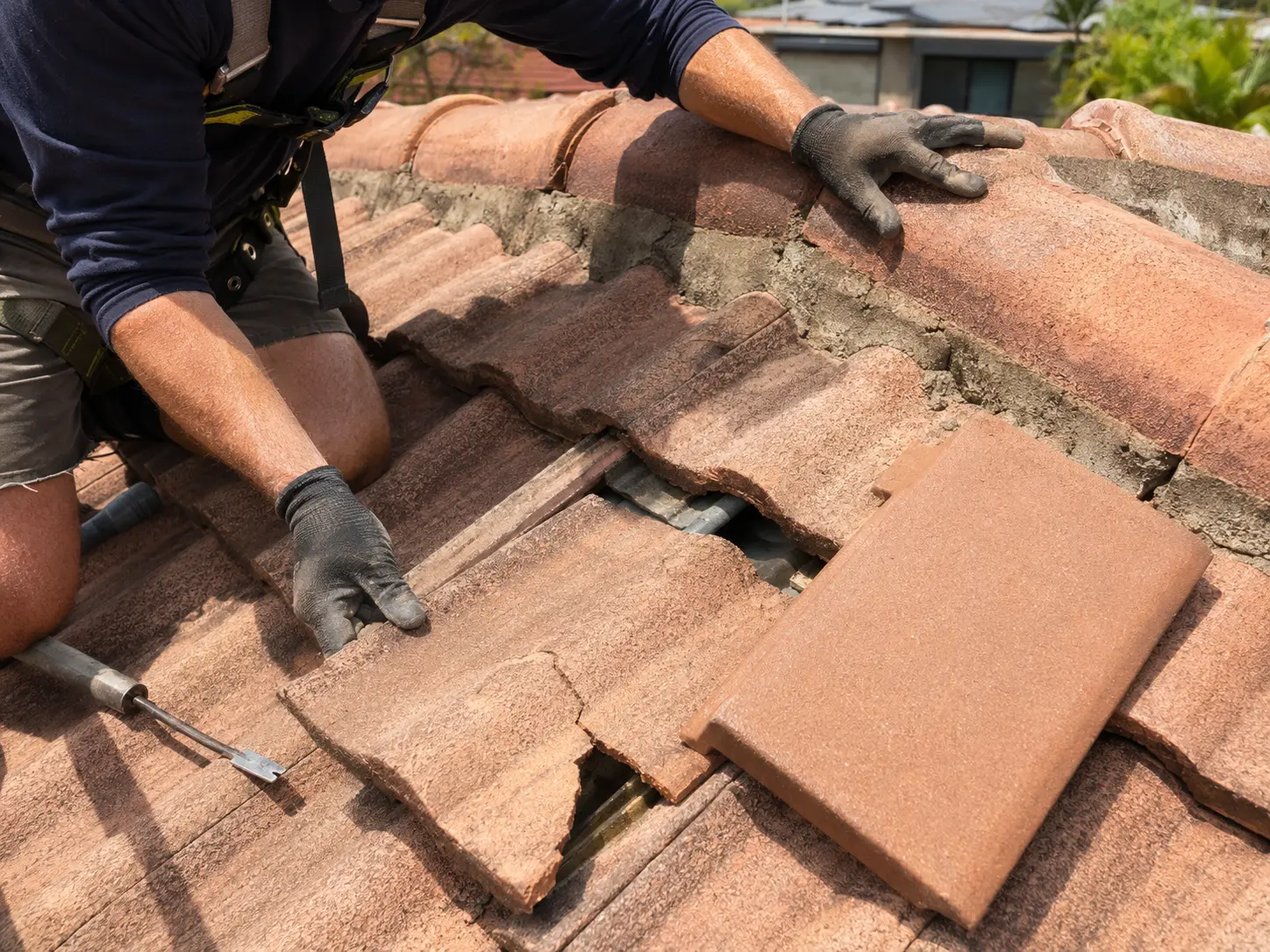
A replacement must fit the roof system, not simply resemble the colour from the ground.
Mortar, pointing, valley metal and flashings often sit on the leak path.
Movement, impact, age and drainage can all create repeated tile-roof faults.
What to look for
A single broken tile is easy to understand. Slow leaks and mortar failures can be less obvious, particularly when water tracks beneath tiles before entering the roof cavity.
Tiles work as overlapping water-shedding units. Cracks, displacement and incorrect overlap can open direct paths, but leaks also form where the tile field meets ridges, valleys, walls and penetrations. Wind-driven rain may reach beneath a tile edge that looks acceptable in dry weather.
The inspection should connect indoor evidence with roof geometry. Homeowners comparing repair and maintenance scopes can also review tile roofing services on the Gold Coast for a local example covering tiled-roof repairs and upkeep. The inspection should also check surrounding tiles because foot traffic, impact, movement or ageing may affect a wider patch than the first visible break.
A compatible tile profile matters because its locks, nose and water channels must sit correctly with the neighbouring tiles. A close colour match can help appearance, but it cannot compensate for the wrong shape. Older tile profiles may require careful sourcing.
The contractor should remove damaged pieces without breaking adjacent tiles, inspect the support and sarking where visible, fit the replacement and check the surrounding course. Repeated movement may point to clips, battens, roof pitch or access damage that needs a broader response.
Ridge and hip caps finish the junctions at the top and angled lines of a tiled roof. Bedding supports the caps; pointing forms the exposed weather seal. Cracked pointing, loose caps and deteriorated bedding can admit water or allow further movement.
Local repointing can fit an isolated sound area. Broader rebedding and repointing may suit widespread failure. The contractor should inspect the full affected line and avoid promising a scope from one ground-level photograph.
Valleys carry concentrated water from adjoining roof planes. Leaves, broken tile pieces, corrosion or displaced cut tiles can restrict flow and send water beneath the covering. Wall and step flashings rely on sound overlaps and correct integration with tiles.
Skylights, vents, pipes and aerial mounts interrupt the tile field. Their flashings and seals need inspection alongside nearby tile cuts. Surface sealant alone may hide a poorly formed detail without changing the route taken by water.
Organic growth can hold moisture and debris around tile laps. Cleaning may form part of maintenance or restoration when the business offers it, but pressure and technique must suit the tile condition. Aggressive cleaning can damage surfaces or drive water beneath the tiles.
Sarking provides a secondary layer beneath many tiled roofs, but its presence and condition vary. Damaged sarking can affect how incidental water reaches the gutter or ceiling. Roof-cavity access should only be attempted when safe, with electrical and structural hazards considered.
Targeted repair fits isolated defects on a serviceable roof. Restoration may combine tile replacement, ridge work, cleaning and surface treatment across a wider area when the roof can support that scope. Replacement may be discussed when failures are widespread or materials cannot be repaired practically.
Coatings should never substitute for broken-tile replacement or sound ridge, flashing and valley work. Ask for the proposed sequence and the defect each stage addresses.
Choosing the scope
Choose the smallest scope that properly deals with the failure and the surrounding roof condition.
| Option | What it addresses | When it may fit |
|---|---|---|
| Repair | Broken tiles, local ridge faults, flashing, valley or penetration defects. | The fault is defined and the nearby tile system remains serviceable. |
| Restoration | A broader coordinated scope covering repairs, ridge work, cleaning and selected surface treatment. | Deterioration extends across the roof, but the system remains suitable for restoration. |
| Replacement | The tiled covering or larger roof system is renewed under an approved scope. | Failures are widespread, tile supply is impractical or the existing system cannot support durable repairs. |
Common questions
Direct answers about inspection, scope and common roof faults.
Ready to act?
Share safe photos, your suburb, the tile type if known and the indoor signs. The inspection can trace the likely water path and define a suitable repair scope.