Inspect before quoting
Check roof covering, ridges, flashings, drainage and substrate before defining a restoration scope.
Broader remedial roofing work
Roof restoration is a coordinated scope across an existing roof. It may include inspection, cleaning, repairs, tile replacement, ridge work and selected surface treatment. It should follow a condition assessment and should never be presented as the answer to every ageing roof.
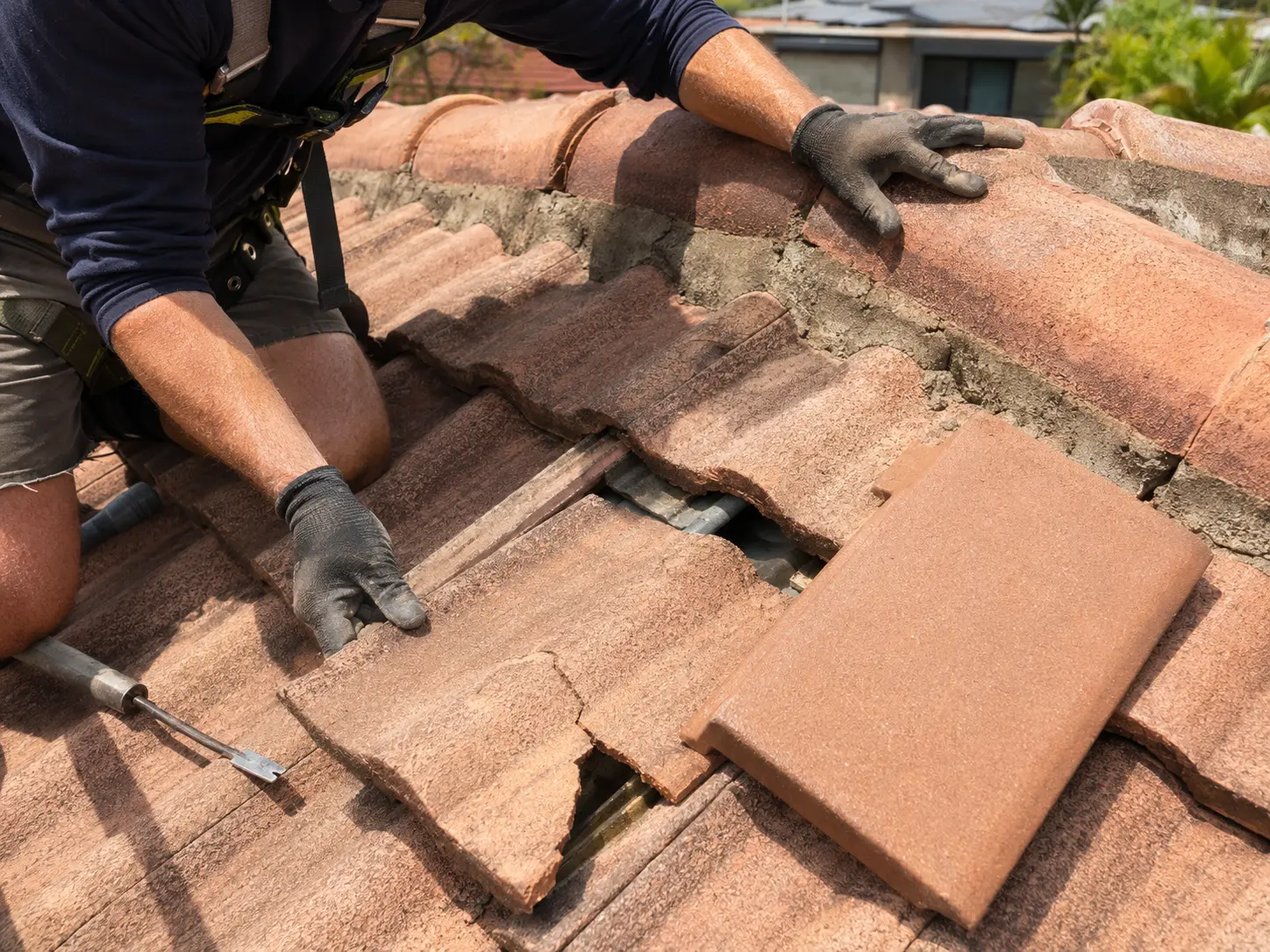
Check roof covering, ridges, flashings, drainage and substrate before defining a restoration scope.
Broken materials and failed details need correction before any surface finish is considered.
A local repair, restoration or replacement should match the actual failure pattern.
What to look for
Restoration sits between local repair and replacement. It may suit broader wear on a roof that can still support the proposed work.
Restoration renews selected parts of an existing roof without automatically replacing the whole covering. On a tiled roof, the scope may cover cleaning, broken tile replacement, ridge work, flashing repairs and a coating system when appropriate. Metal restoration may cover cleaning, corrosion treatment, fixing or flashing work and a compatible coating where the roof supports it.
The exact steps depend on roof type and condition. Homeowners comparing broader maintenance scopes can review roof restoration services on the Gold Coast as a local example of restoration work. A list of standard inclusions is not a diagnosis. The quote should state the defects found, preparation method, repair stages, products, exclusions and final checks.
A restoration candidate needs a serviceable underlying roof. The contractor should inspect tile or sheet condition, ridges, flashings, penetrations, valleys, gutters and visible support concerns. Repeated leaks, widespread corrosion, extensive breakage or unsuitable substrate can change the recommendation.
Safe roof-cavity observations may add information about past water entry, sarking and framing. Structural concerns need the right licensed professional. A restoration quote should not hide those limits.
Cleaning removes dirt, loose material and organic growth so repairs and selected coatings can bond to a sound surface. Pressure, technique and containment must suit the roof material and site. Water should not be driven beneath tiles or into known defects.
Preparation can include protecting adjoining areas, clearing drainage points, removing loose coatings and allowing surfaces to dry. The contractor should explain how runoff and debris will be managed around the property.
Broken tiles should be replaced with a compatible profile before finishing work. Ridge caps need stable bedding and sound pointing. Coating over loose caps, failed mortar or incompatible repairs does not correct the underlying movement.
Local ridge work may fit isolated defects. Broader rebedding and repointing may form part of restoration when failure extends along multiple ridge or hip lines. The scope should identify which areas will be treated and why.
Surface systems should suit the roof material, its condition and the manufacturer's preparation requirements. A coating can change appearance and provide a renewed surface, but it does not turn unsound tiles, perforated metal or failed flashing into sound roofing.
Metal work needs special attention to corrosion, compatibility and adhesion. Rust treatment, fastener work and sheet replacement may come before coating. List coating or metal-restoration services only after the business confirms the methods and products it offers.
A restored roof still needs drainage kept clear and new impact or storm damage checked. Leaves, blocked outlets and work by other trades can affect roof performance after the project. Keep the written scope, product details and completion photos with the property records.
No unsupported lifespan promise belongs on the website. Service life varies with roof condition, preparation, materials, workmanship, exposure and later maintenance. Any warranty statement should match genuine written terms supplied by the business.
Choosing the scope
The best-value scope is the one that properly addresses the condition without selling work the roof does not need.
| Option | What it addresses | When it may fit |
|---|---|---|
| Roof repair | Defined defects and local water-entry points. | The rest of the roof remains serviceable and broad preparation is unnecessary. |
| Roof restoration | Coordinated repairs, preparation and selected surface work across a serviceable roof. | Wear is broader than one fault, but the system remains suitable for restoration. |
| Roof replacement | The covering or roof system is renewed under a measured and approved scope. | Failure is widespread, materials are no longer serviceable or restoration cannot provide a sound result. |
Common questions
Direct answers about inspection, scope and common roof faults.
Ready to act?
Ask for an inspection that records the roof condition and explains why the proposed scope fits. A written comparison can prevent a local repair from turning into unnecessary broad work.