Inspect the sheet system
Review corrugations, overlaps, cut edges and signs of impact or corrosion.
Metal roof repair and inspection
Metal roof repair calls for close attention to sheet condition, fasteners, laps, flashings, penetrations and drainage. A small leak can start at a loose fixing, corroded edge or poorly detailed junction, then travel beneath the roof before it appears indoors.
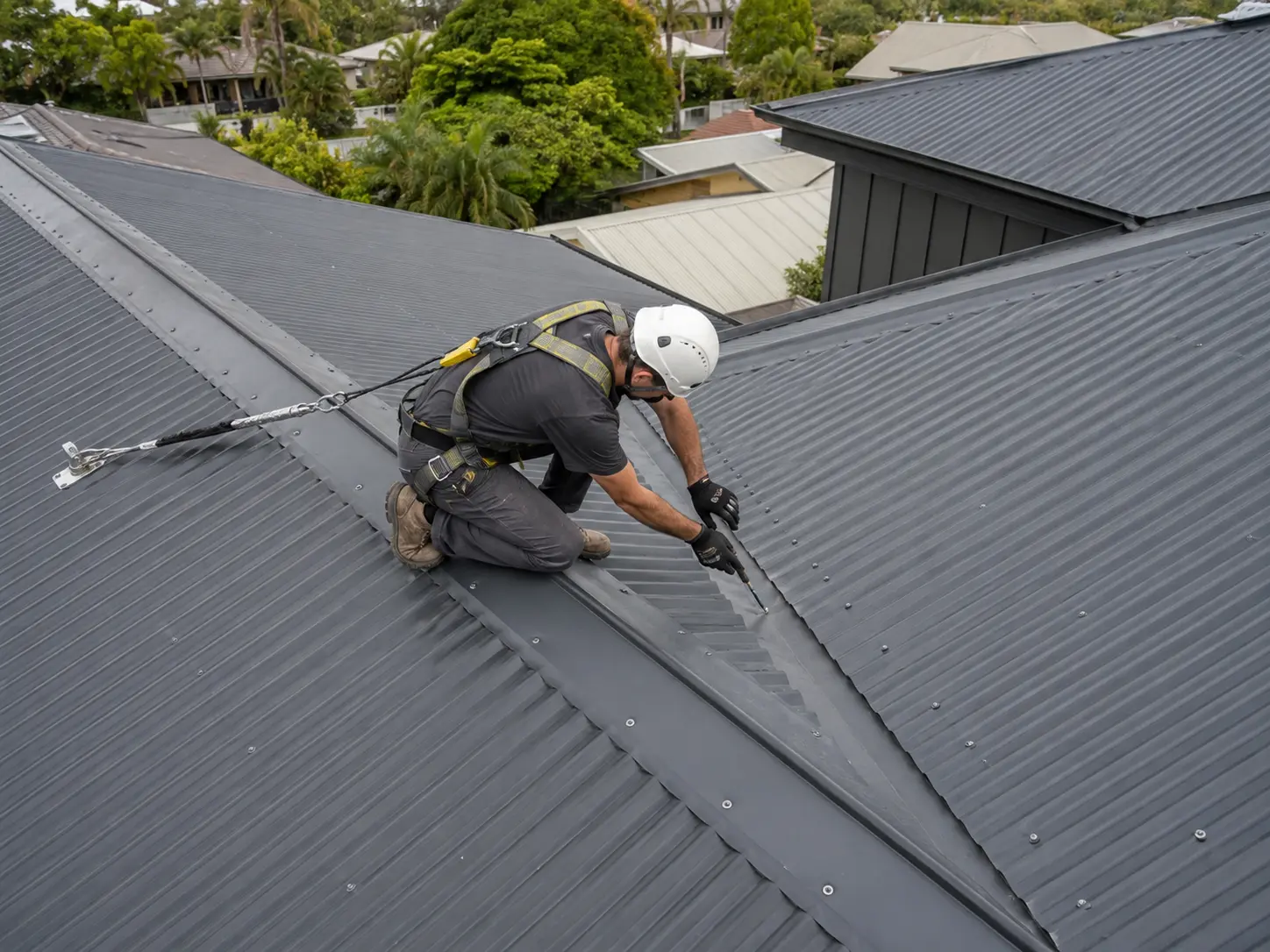
Review corrugations, overlaps, cut edges and signs of impact or corrosion.
Look at flashings, ridges, valleys, walls and roof penetrations where water paths change.
Match metals, coatings, fixings and sealants to reduce corrosion and repeat leaks.
What to look for
Some faults remain small when found early. Others indicate broader sheet, flashing or fixing issues. Indoor evidence and roof-surface condition should be considered together.
A metal roof sheds water through a connected system of profiled sheets, laps, fixings, flashings and drainage paths. A fault at one part can let water move beneath the sheet or along a purlin before it reaches the ceiling. The location of the internal stain should guide the search, but it does not settle the diagnosis.
Inspection should work upslope and across nearby junctions. Property owners comparing repair, restoration and maintenance coverage can review metal roofing on the Gold Coast as a relevant local service example. Fasteners, side laps, end laps, ridge capping, valley lines, barge flashings and penetrations all deserve attention. Debris and ponding can also hold moisture against areas that were designed to drain freely.
Surface discolouration, coating damage and perforation represent different stages of metal deterioration. The contractor should identify the source of moisture, check the metal type and inspect the surrounding area before proposing patching, sheet replacement or a wider scope.
Contact between incompatible metals can accelerate corrosion. So can trapped leaves, swarf left after cutting and persistent damp at laps or gutters. Painting over active corrosion without preparation or repairing the water trap can leave the main cause in place.
Roof movement, age, incorrect installation or damaged washers can affect fastener performance. A backed-out screw may create a direct water path. Over-tightening can deform a washer or sheet, while simply adding new screws beside failed holes can create a poor fixing pattern.
The repair method depends on the substrate, existing hole, fixing type and sheet profile. The contractor should also check nearby rows because one visible loose fastener may sit within a wider pattern of movement or ageing.
Flashings direct water around changes in plane and material. Wall junctions, ridges, valleys, skylights, flues, vents and pipes all rely on shape, overlap and drainage as well as sealant. A neat bead of sealant cannot correct a flashing that sends water the wrong way.
The inspection should look for open laps, short coverage, cracked sealant, loose rivets or screws, corrosion and movement. Any new penetration should use a detail suited to the roof profile and expected water flow.
Pre-finished steel roofing comes in profiles, colours and specifications selected for the building and exposure. Mention COLORBOND® steel services publicly only when the business genuinely supplies or works with the product. Product choice should suit roof pitch, location, drainage and compatibility with adjoining materials.
Local repairs may fit isolated damage. Replacement sheets can suit defined failures where matching material and access allow. Re-roofing is a larger project that needs a documented scope, building checks and any required approvals. It should not be presented as the automatic answer to a repairable leak.
Metal roofs work with the surrounding roof-edge and ventilation details. Blocked gutters, poor falls or deteriorated fascia can direct water toward the building. Condensation and ventilation concerns also need to be separated from rain entry because the solutions differ.
A maintenance inspection can record coating damage, debris traps, fastener condition, sealant changes, gutter flow and movement at flashings. The business should list maintenance and ventilation work only after confirming the services it provides.
Choosing the scope
The visible mark alone does not determine the scope. Inspect the surrounding metal, fixings, flashings, substrate and failure pattern.
| Option | What it addresses | When it may fit |
|---|---|---|
| Local repair | Defined faults such as a failed fixing, small flashing defect or isolated sheet damage. | The nearby metal remains sound and the water path can be corrected. |
| Restoration | A coordinated surface and remedial scope across a serviceable roof. | Coating and maintenance issues are broader, while the roof system can still support the proposed work. |
| Sheet replacement | One or more sheets, flashings or components are renewed. | Damage is local but the failed metal cannot support a durable patch. |
| Re-roofing | A new roof covering or system is installed under an approved design and scope. | Failure is widespread, compatibility is poor or repairs no longer make practical sense. |
Common questions
Direct answers about inspection, scope and common roof faults.
Ready to act?
Share the roof type, property location, leak symptoms and safe photos. A proper inspection can separate a local fixing or flashing fault from broader metal-roof work.