Find the entry point
Follow water paths and inspect likely roof defects before treating the indoor stain.
Queensland roof repair services
Searching for roof repair near me usually means a leak, visible damage or a problem that cannot wait for guesswork. This page explains how tile, metal, flashing, ridge, valley, gutter and storm-related faults should be assessed before a repair scope is agreed.
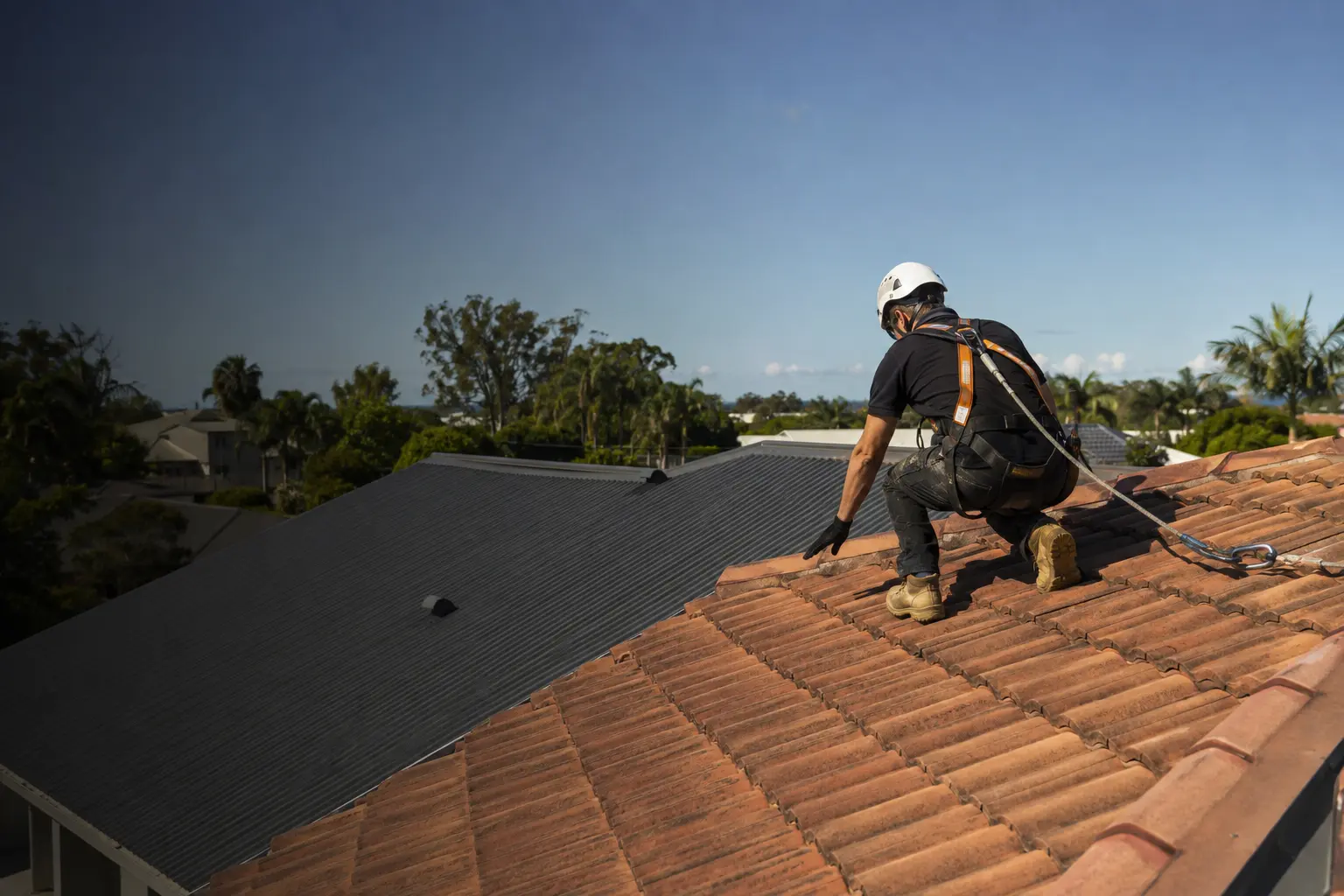
Follow water paths and inspect likely roof defects before treating the indoor stain.
Tile, metal, flashing and drainage faults need different materials and repair methods.
Separate the immediate defect from broader maintenance, restoration or replacement decisions.
What to look for
Indoor symptoms can appear after a roof fault has been present for some time. Record when the sign appears, take photos from a safe place and avoid climbing onto the roof yourself.
The wet patch inside rarely identifies the entry point on its own. Water may track along a rafter, roof batten, sarking, pipe or ceiling framing before it becomes visible. Wind-driven rain can also move uphill beneath an overlap or enter at a junction that appears dry in calm weather.
A useful inspection starts indoors when access is safe. The location, direction of staining, moisture pattern and timing of the leak help narrow the search. Homeowners comparing professional local services can also review roof repairs on the Gold Coast as an example of the tile, metal, leaking-roof and storm-damage work offered by an established contractor. On the roof, the contractor can inspect the covering and details that sit above and upslope from that evidence. A controlled water test may help in selected cases, but it should not replace a careful visual assessment.
A tiled roof can leak through a cracked tile, a tile that has slipped out of position, damaged valley metal, failed flashing or deteriorated mortar around ridge caps. Replacing one obvious tile can be sensible, but the repair should also check the neighbouring course and the detail that caused the movement or breakage.
Ridge capping work may involve local pointing repairs or a broader rebedding and repointing scope. The existing mortar condition, movement along the ridge and state of adjacent tiles should guide that choice. Old clips, penetrations and sarking condition may also matter when water has entered repeatedly.
Metal roof leaks often occur at laps, flashings, penetrations, damaged sheets or fasteners that have loosened or lost their sealing performance. Corrosion can begin around cut edges, debris traps and areas exposed to persistent moisture. A visible rust spot may represent a small local defect or part of a wider pattern.
The inspection should check roof-sheet condition, fixing type and spacing, washers, flashing folds, sealant use, ridge and barge details, penetrations and drainage direction. A repair should use compatible materials and avoid creating new corrosion or water traps.
After severe weather, stay off the roof. Wet surfaces, loose materials, damaged electrical equipment and unstable branches create hazards that are not visible from the ground. Photograph damage from a safe position and note when water entered or when the roof changed.
Repairs may cover broken tiles, displaced ridge caps, dented or punctured metal, lifted flashing, damaged gutters or penetrations affected by impact. Temporary make-safe work should only be listed as a service when the business genuinely offers it. The permanent scope should follow a safe inspection once conditions allow.
A blocked outlet, leaking gutter joint, incorrect fall or overflow can wet fascia, eaves and wall cavities. Water may then present as a roof leak even when the tiles or sheets above remain intact. The roof edge and drainage system belong in the diagnosis.
Skylights, vents, aerial mounts, solar-related penetrations and pipe flashings create changes in the roof plane. Each needs sound flashing, seals and water-shedding details. Applying sealant over the visible gap without correcting the detail can hide the fault for a short time rather than repair it.
Residential roofs may involve tile or metal systems, roof cavities, attached patios, solar equipment and close access around gardens or neighbours. Commercial roofs can add broad sheet runs, box gutters, mechanical penetrations and different access requirements. Body corporate or strata work may need approval and reporting before repairs begin.
List commercial, industrial, body corporate or emergency services only after the business confirms it provides them. The same rule applies to response times and written reports. Clear configuration keeps the public offer accurate while the page still explains the diagnostic process.
Choosing the scope
These terms describe different scopes. The roof condition, failure pattern and expected service outcome should drive the recommendation.
| Option | What it addresses | When it may fit |
|---|---|---|
| Repair | One or more defined faults, such as a cracked tile, failed flashing or damaged sheet. | The surrounding roof remains serviceable and the cause can be isolated. |
| Maintenance | Preventative tasks and minor corrections that reduce avoidable deterioration. | The roof has no broad failure but needs cleaning, adjustment or small remedial work. |
| Restoration | A coordinated set of works across a serviceable roof, often including repairs and surface preparation. | Local repairs alone will not address the broader condition, but full replacement is not indicated. |
| Replacement | Removal or overlay work that renews a roof covering or system under an approved scope. | Deterioration is widespread, materials have failed or repair is no longer practical. |
Common questions
Direct answers about inspection, scope and common roof faults.
Ready to act?
Send the suburb, roof type, indoor symptoms and safe photos. The team can confirm the service area and explain the inspection step without guessing at the repair.