Follow the drainage path
Check where roof water enters the gutter, reaches the outlet and leaves through downpipes.
Roof-edge drainage and repair
Gutters, downpipes and fascia form the working edge of the roof. Leaking joints, blocked outlets, poor falls, overflow and deteriorated fascia can damage eaves and walls or create symptoms that look like a roof-covering leak.
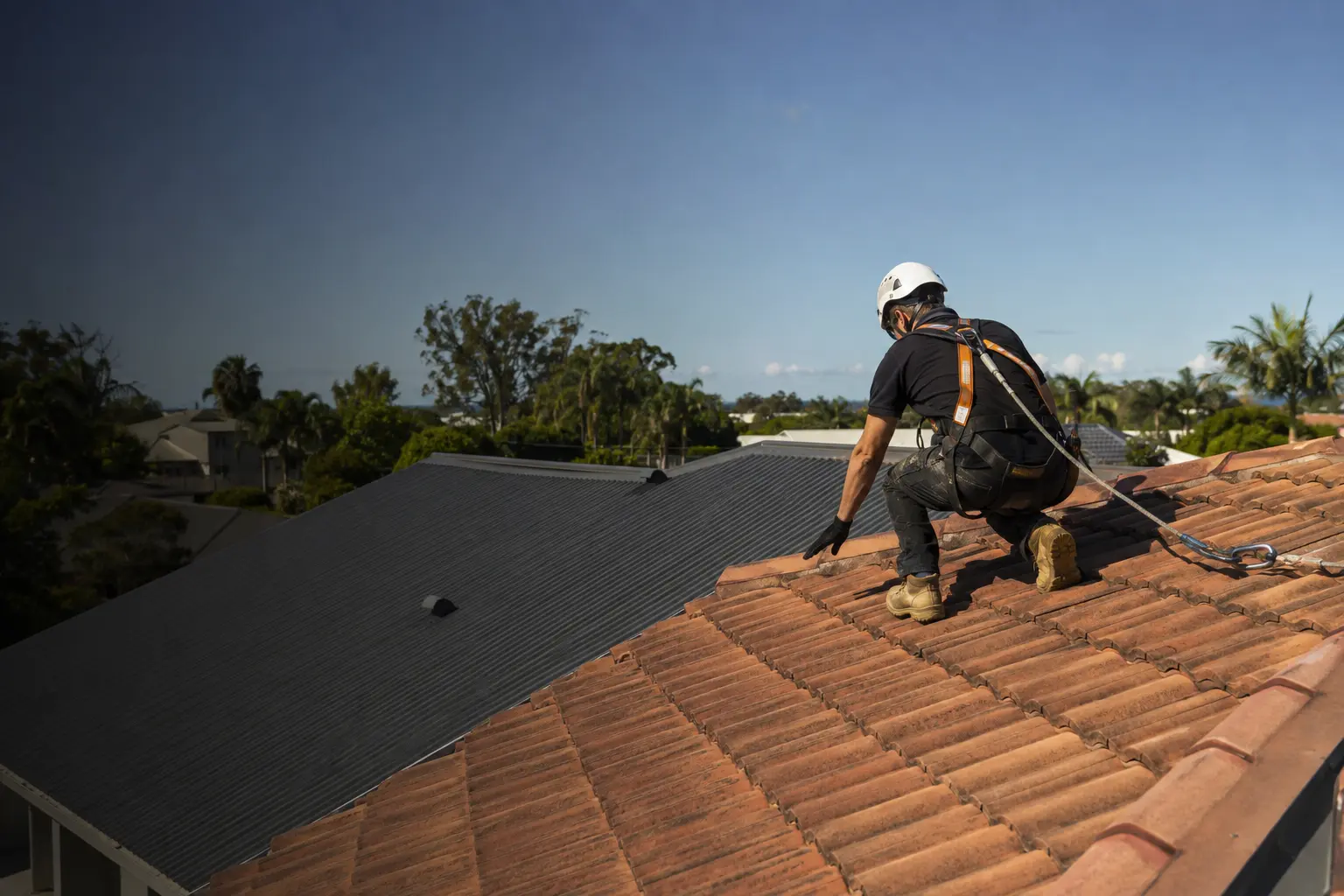
Check where roof water enters the gutter, reaches the outlet and leaves through downpipes.
Look for leaks at joins, water behind gutters and deterioration where fascia supports the system.
Cleaning, adjustment, repair and replacement solve different gutter problems.
What to look for
Overflow during heavy rain gives useful evidence. Note the location and direction of the water from the ground, then let a contractor inspect the system safely.
A gutter receives water from the full roof plane above it. During heavy Queensland rainfall, a blocked outlet, poor fall or inadequate flow path can cause water to spill over the front, run behind the gutter or rise toward the roof edge. The indoor symptom may then resemble a tile or metal roof leak.
A contractor should inspect the overflow point, gutter level, outlets, downpipes, brackets and roof-edge detail. Owners comparing local drainage and roof-edge work can review fascia and gutter services on the Gold Coast as one practical service example. Leaves are one possible cause, but cleaning alone will not correct a damaged join, poor fall or restricted discharge path.
Gutter systems use joints and sealed components at changes in direction and length. Movement, corrosion, impact and failed sealant can open a leak. Water can track along the gutter before falling, so the visible drip may not sit directly below the failed joint.
A repair should start with clean, sound surfaces and materials compatible with the existing gutter. Repeated patching over rusted or distorted metal may not provide a sensible result. Defined component replacement may fit better when the base material has failed.
Downpipes move water from gutter outlets toward the stormwater system or approved discharge point. A blockage, crushed section, leaking connection or restricted lower pipe can cause the gutter to back up. Water pooling at the base can also affect paths, gardens and foundations.
The roof contractor can assess visible gutter and downpipe components. Underground stormwater faults may call for a licensed drainage specialist. The public service list should state the boundary clearly rather than promising work outside the business's trade scope.
Fascia creates the finished roof edge and may support gutter brackets. Persistent leaks can stain, corrode or rot fascia depending on the material. A sagging gutter can also pull on the fascia, while damaged fascia can prevent the gutter from holding the correct line.
The inspection should identify the source of moisture and test the condition around affected fixings. Painting over soft timber or surface-treating corroded metal will not restore support. Repair or replacement scope should account for the gutter attachment and adjoining roof edge.
Wind, hail and falling branches can dent gutters, loosen brackets, damage stop ends or twist downpipes. The roof edge may also receive debris from damaged tiles or roof fixtures. Stay clear of loose materials and do not climb a ladder during severe weather.
Once conditions are safe, record the affected sections, check flow paths and inspect related roof damage. A gutter-only patch may miss tile, sheet or flashing faults created by the same event.
Gutter guards can reduce some debris entry, but they do not remove the need for inspection and cleaning. Fine material can still collect, valleys can feed debris into concentrated points and access for maintenance remains necessary. Product choice should suit the roof, surrounding vegetation and bushfire requirements where relevant.
Advertise gutter-guard installation only when the business offers it. A practical maintenance plan should account for the property's tree cover, roof shape, outlet design and past overflow points rather than rely on one fixed interval for every home.
Choosing the scope
The condition of the base material, the gutter line and the drainage fault should set the scope.
| Option | What it addresses | When it may fit |
|---|---|---|
| Cleaning | Leaves, sediment and removable blockage from accessible gutter and outlet areas. | The gutter remains sound, aligned and correctly connected. |
| Repair | Defined leaking joins, brackets, stop ends, small damaged sections or connections. | Most of the system remains serviceable and the fault can be isolated. |
| Adjustment | Falls, brackets or connection details are corrected where the existing system supports it. | Standing water or overflow relates to alignment rather than failed material. |
| Replacement | Long sections or the full gutter system are renewed under a measured scope. | Corrosion, cracking, distortion or poor configuration is widespread. |
Common questions
Direct answers about inspection, scope and common roof faults.
Ready to act?
Share your suburb and describe where water spills, drips or pools. Safe photos taken during or after rain can help the inspection focus on the right gutter, downpipe and fascia sections.